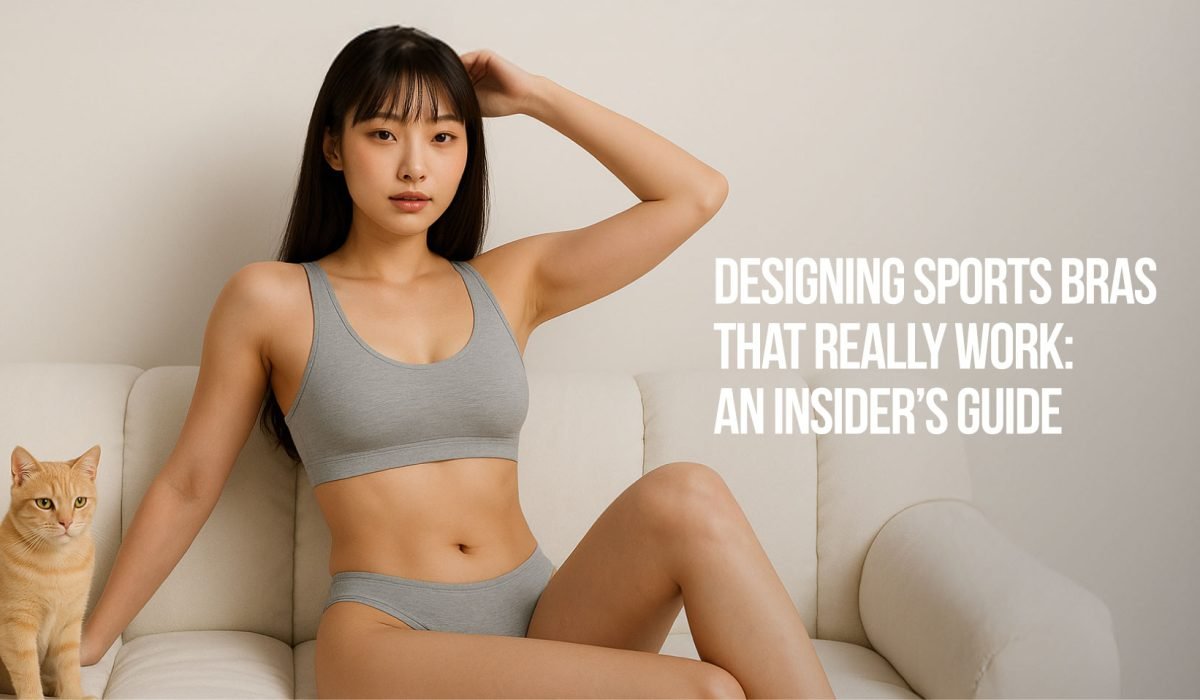
Sports bras may appear simple, but they are far from it. A well-made sports bra is like a miniature work of craftsmanship, composed of premium fabrics, meticulously designed patterns, and strategically placed elastic narrow webbing in the right spots. This guide compiles the key considerations our experienced apparel team—including R&D personnel from our 200-million-unit enterprise—focuses on when transforming design sketches into high-performance, mass-producible products. We approach this as a holistic system, encompassing support styles, the critically important hem elastic, fabric selection, sewing techniques, durability, sustainability, and how Er Yi Enterprise’s narrow elastic bands truly deliver their intended function.
Starting from the usage scenario: Activity intensity determines the design direction.
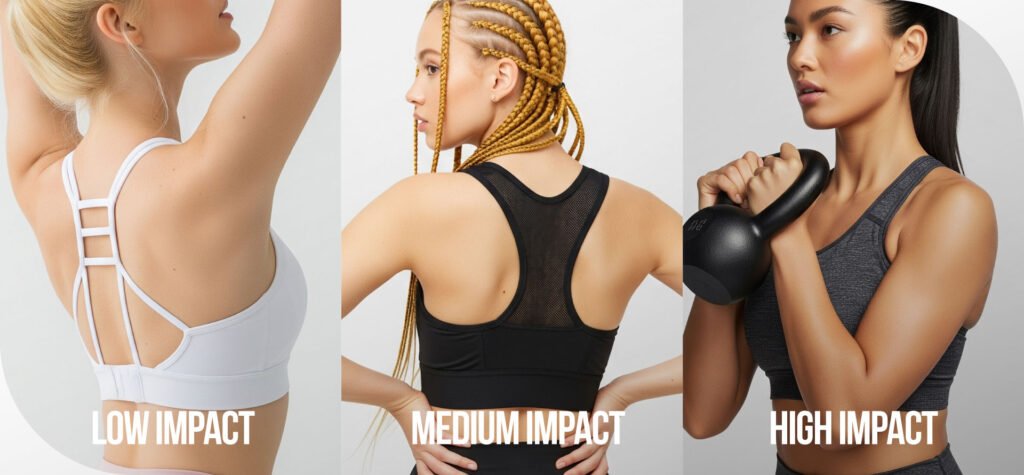
Before selecting fabrics, accessories, or even style designs, first confirm the actual purpose of the sports bra. Activity intensity will determine nearly all subsequent design choices, affecting everything from the elasticity of the hem band to the shoulder strap configuration.
Low Intensity (Yoga, Pilates, Stretching): Comfortable, breathable, and easy to move in.
Moderate Intensity (Hiking, Cycling, Dance): Balance support and stretch.
High Intensity (Running, HIIT, Ball Sports): Minimize bounce and provide secure fit.
Choose the design direction based on the specific activity. A bra with excessive support for yoga will feel too tight; one with insufficient support for running will be ineffective.
Select Support Style: Compression, Enveloping, or Both
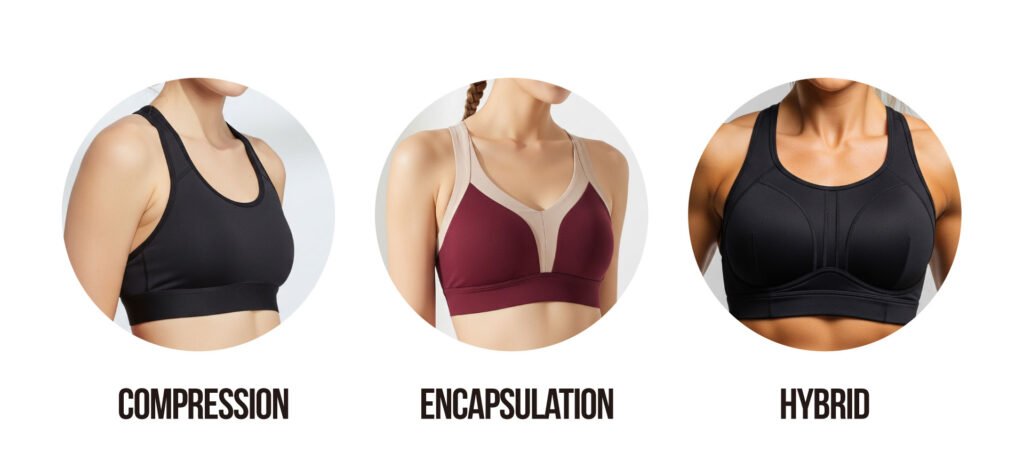
After determining activity intensity, the next step is choosing the support style. The structural approach—compression, enveloping, or hybrid—directly impacts comfort, stability, and long-term performance.
Compression Style: The entire bra hugs the body to minimize movement. Minimalist, economical, suitable for smaller busts or low-intensity activities.
Enveloping: Features independent cups per breast (molded or seamed). Offers a more sculpted silhouette and precise support, suitable for extended wear or fuller sizes.
Hybrid: Combines enveloping cups with a compression layer. Ideal for high support and multi-size applications, with higher test pass rates.
Internal recommendation: When design requirements call for “high support + multi-size compatibility,” the hybrid approach typically achieves goals most efficiently.
Make the hem elastic the focal point (targeted solution)
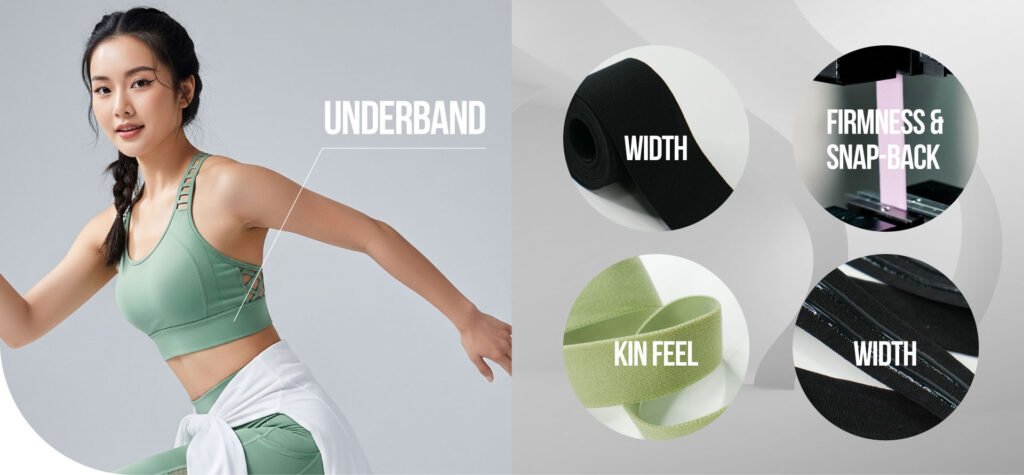
The seemingly unremarkable hem elastic is actually crucial for the stability of the entire sports bra. This area requires precise design—from width, elasticity, and rebound to texture—rather than simply using any elastic band.
“The hem elastic is the core of support. Whether featuring high rebound or a wide matte-finish design, it keeps the sports bra stable and prevents slippage during activity.” — Designer, 200 Million Enterprises
Key Design Parameters:
Width: A wide band distributes pressure and prevents curling. A longer cut provides extra stability.
Resilience: Must be snug without restricting breathability, retaining its shape even after prolonged wear.
Feel: Brushed or velvety backs feel softer against skin.
Anti-slip: Silicone coating or textured surfaces prevent shifting during sweat.
Closure Options:
Snap-free for easy on/off; back-clasp allows adjustment (ideal for long-term wear or stretched fabric). If using hardware, pad inner edges to prevent skin irritation.
Provided by 200 Million Enterprises:
Customizable hem elastic bands—specify width, rebound, texture, and color. Options include anti-slip functionality, branded woven labels, or printed designs. Our vertically integrated manufacturing ensures consistent styling across all accessories.
Shoulder Strap and Back Design: A Stable, Integrated Framework
The shoulder straps and back construction determine whether lingerie stays in place during movement. The materials and pattern must strike a balance between stability and flexibility.
Shoulder Strap Design: Wider straps distribute pressure; thicker padding enhances comfort. Elastic materials should maintain stability and resist deformation.
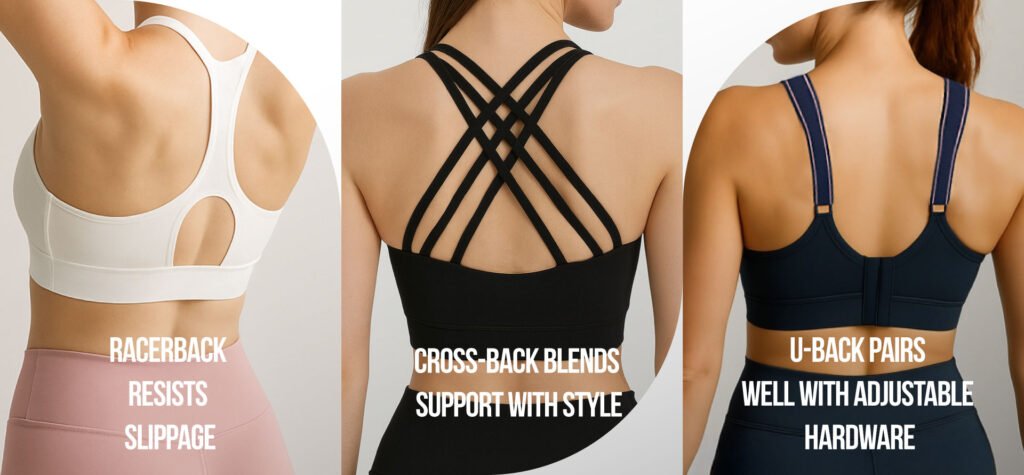
Back Style Selection: Y-shaped elastic webbing prevents slippage; crisscross straps offer support and shaping; U-shaped backs facilitate easy adjustment.
Goal: Full-body stability, comfortable straps, unrestricted breathing.
“Use 30–35 mm wide straps crossed from front to back to ensure bust stability and privacy.” — Designer, 200 Million Enterprises
200 Million Enterprises’ “Wide-Narrow Straps”: A single strap features varying width zones—narrow where stability is needed, wide where comfort is prioritized.
Establishing a “Fabric System” Rather Than a Single Fabric
A sports bra typically incorporates not just one fabric specification, but a specialized fabric system. Different sections serve distinct functions, such as moisture management, breathability, support, or shaping.
Common Configurations
1. Outer Layer: Supportive stretch knit fabric (nylon/polyester + spandex)
2. Inner Layer: Skin-friendly, moisture-wicking knit or stretch mesh
3. Ventilation Zones: Mesh or perforated fabric on center front, wings, and upper back
4. Cups: Molded cups (3D coverage) or removable pads (Secured in pockets to prevent shifting)
Fabric Specification Highlights
Elasticity & Resilience: Stretches freely where needed, snaps back to shape after use—no sagging or deformation.
Elastic Direction: Strategically placed elasticity maintains overall breathability.
Quick-Dry & Feel: Fast-drying, soft against skin—wearer comfort guaranteed.
Where Narrow Webbing Meets Fabric
Fold-Over Elastic (FOE) at necklines and cuffs creates clean, soft edges that move with the body. Adding stabilizing fabric inside collars prevents stretching and sagging over time. FOE covers seam bulk, softening edges while preventing stiffness.
Structural Details: Comfort Stems from These Small Choices
Sweat combined with movement can cause friction, so structural design should minimize potential pressure points. Use flat seams like flatlock or bonded seams to keep the skin-contact surface smooth. If these aren’t feasible, cover seam allowances with soft binding to prevent direct skin friction.
Hardware components like adjustment rings and metal buckles should be positioned away from high-pressure zones. If the design includes a front zipper, incorporate a soft inner flap and top guard panel to minimize discomfort. For edge finishing, use fold-over elastic or plush binding to prevent digging or “cutting lines.” Maintain consistent stitch tension to avoid puckering or shrinking along edges.
Finally, opt for post-printing or heat transfer labels, which offer better skin feel and avoid irritation unlike traditional fabric tags.
Our go-to quick-fit test method:
For each size sample, we simulate 20–30 minutes of dynamic testing (raising arms, push-ups, light jogging). Then we turn the garment inside out and gently run our fingertips along every seam. Each simulation represents real-world wear.
Durable Design: Built for Real Life
Sports bras must withstand repeated washing, sweat penetration, and high-intensity activity. Durability is considered from the initial design phase to ensure consistent fit, support, and appearance even after repeated wear.
Resilient Elasticity: Features elastic waistbands that retain their stretch after thousands of stretches.
Colorfastness: Utilizes dyeing and finishing techniques resistant to sweat and occasional exposure to chlorinated pool water.
Key Support Areas: Reinforced stitching at pressure points maintains stability, paired with rust-resistant hardware.
With gymallfit enterprises possessing keen expertise in dyeing and finishing, every component—from waistbands and binding to shoulder straps—retains consistent appearance and feel throughout the product’s lifespan.
 English
  French
  German
  Spanish
  Arabic